


Table of Contents
Top Places to Visit in Bhutan – Discover the Mystical Charms of Bhutan
Tucked away in the eastern ridges of the Himalayas, Bhutan is a beautiful destination full of vibrant culture, spirituality, and natural beauty. This enigmatic mountain kingdom is brimming with mystical monasteries, majestic fortresses, and landscapes that will captivate your heart. If you’re planning a trip to Bhutan, here’s a guide to the Top places to visit in Bhutan that you should not miss.

Why Visit Bhutan?
Bhutan is unlike any other destination in the Himalayas. Known as the “Land of the Thunder Dragon,” this small mountain kingdom has preserved its unique culture, traditions, and natural environment while embracing sustainable tourism. From ancient monasteries perched on cliffs to peaceful valleys and snow-capped Himalayan peaks, Bhutan offers travelers an authentic and enriching experience.
Visitors come to Bhutan to explore sacred Buddhist sites, witness colorful festivals, enjoy breathtaking mountain scenery, and experience the country’s famous philosophy of Gross National Happiness. Whether you are interested in culture, spirituality, nature, photography, or adventure, Bhutan offers a journey that feels both inspiring and unforgettable.
Highlights of Visiting Bhutan
- Discover the iconic Tiger’s Nest Monastery
- Experience authentic Bhutanese culture and traditions
- Visit magnificent dzongs and monasteries
- Enjoy stunning Himalayan mountain views
- Explore peaceful valleys and rural villages
- Attend vibrant Bhutanese festivals (Tshechus)
- Travel in one of the world’s most environmentally conscious countries
- Experience warm Bhutanese hospitality
Bhutan’s commitment to preserving its heritage and limiting mass tourism makes it one of the most unique and rewarding destinations in Asia.
Best Time to Visit Bhutan
Bhutan can be visited throughout the year, but the best time depends on your interests, weather preferences, and travel plans.
Spring (March to May)
Spring is one of the most popular seasons to visit Bhutan. The weather is pleasant, flowers bloom across the hillsides, and the skies are generally clear.
Spring is ideal for:
- Sightseeing
- Photography
- Cultural tours
- Trekking
- Festival experiences
Travelers can enjoy colorful rhododendron forests and beautiful mountain views during this season.
Autumn (September to November)
Autumn is widely considered the best overall time to visit Bhutan. Clear skies, comfortable temperatures, and excellent visibility make it perfect for exploring the country’s top attractions.
Autumn offers:
- Spectacular Himalayan views
- Stable weather conditions
- Major cultural festivals
- Excellent trekking opportunities
- Ideal photography conditions
This is also the busiest tourist season in Bhutan.
Winter (December to February)
Winter brings cooler temperatures but also fewer tourists and excellent mountain visibility. Lower elevations such as Paro, Thimphu, and Punakha remain comfortable for sightseeing.
Winter highlights include:
- Peaceful travel experience
- Clear mountain views
- Black-necked crane migration in Phobjikha Valley
- Lower visitor numbers
Monsoon (June to August)
The monsoon season brings regular rainfall, particularly in southern and central Bhutan. However, the landscapes become lush and green, and there are fewer tourists.
Monsoon travel may appeal to visitors who:
- Prefer quieter destinations
- Enjoy green landscapes
- Want lower-season travel experiences
Although occasional rain may affect visibility, cultural sightseeing remains possible throughout much of the country.
Top Places to Visit in Bhutan
1. Tiger’s Nest Monastery (Paro Taktsang)
Perched dramatically on a cliffside at an altitude of approximately 3,120 meters, Tiger’s Nest Monastery is Bhutan’s most iconic landmark and one of the country’s most sacred Buddhist sites. According to legend, Guru Rinpoche flew to this location on the back of a tigress and meditated in a cave, helping establish Buddhism in Bhutan.
The monastery offers breathtaking views of the Paro Valley and is reached via a rewarding hike through pine forests decorated with prayer flags. Most visitors consider the hike to Tiger’s Nest the highlight of their Bhutan journey.
Highlights
- Bhutan’s most famous attraction
- Spectacular cliffside location
- Sacred Buddhist pilgrimage site
- Stunning views of Paro Valley
- Excellent photography opportunities
2. Paro Valley
Paro Valley is often the first destination travelers experience after arriving in Bhutan. Surrounded by forested mountains and traditional villages, the valley offers a perfect introduction to Bhutanese culture and scenery.
The valley is home to several important landmarks, including Rinpung Dzong, the National Museum of Bhutan, and the famous Tiger’s Nest Monastery. Walking through Paro provides visitors with a glimpse into traditional Bhutanese life, where ancient customs continue to thrive.
Highlights
- Traditional Bhutanese architecture
- Rinpung Dzong
- National Museum of Bhutan
- Scenic countryside landscapes
- Cultural and historical attractions
3. Thimphu
Thimphu, the capital city of Bhutan, combines traditional culture with modern development. Despite being the country’s largest city, Thimphu retains a relaxed atmosphere and strong cultural identity.
Visitors can explore monasteries, museums, local markets, and impressive landmarks such as the giant Buddha Dordenma statue. The city also offers excellent opportunities to experience Bhutanese cuisine, arts, and daily life.
Highlights
- Buddha Dordenma Statue
- Tashichho Dzong
- Memorial Chorten
- Folk Heritage Museum
- Weekend Market
4. Punakha Dzong
Often regarded as the most beautiful dzong in Bhutan, Punakha Dzong stands majestically at the confluence of the Pho Chhu and Mo Chhu rivers. It served as the capital of Bhutan until 1955 and remains one of the country’s most important religious and administrative centers.
The dzong is particularly stunning during spring when jacaranda trees bloom around its grounds.
Highlights
- Bhutan’s most beautiful dzong
- Historic former capital
- Riverside location
- Rich cultural heritage
- Outstanding photography location
5. Dochula Pass
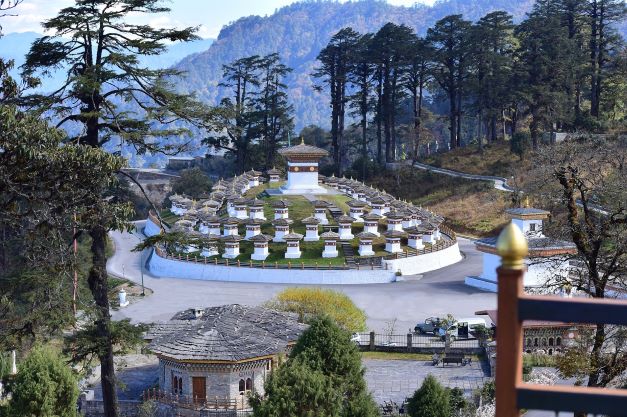
Located at an altitude of 3,100 meters, Dochula Pass is one of Bhutan’s most scenic mountain passes. The pass is famous for its 108 memorial chortens and panoramic Himalayan views.
On clear days, visitors can see snow-capped peaks stretching across the horizon, making it one of Bhutan’s best viewpoints.
Highlights
- 108 memorial chortens
- Panoramic Himalayan views
- Scenic mountain drive
- Photography opportunities
- Peaceful atmosphere
6. Phobjikha Valley
Phobjikha Valley is a breathtaking glacial valley known for its pristine natural beauty and importance as the winter home of the endangered black-necked crane.
The valley offers beautiful hiking trails, traditional villages, and a peaceful environment that contrasts with Bhutan’s more visited destinations.
Highlights
- Black-necked crane sanctuary
- Beautiful glacial valley
- Nature walks and hiking
- Traditional rural lifestyle
- Excellent birdwatching
7. Gangtey Monastery
Overlooking the beautiful Phobjikha Valley, Gangtey Monastery is one of the most significant Nyingma Buddhist monasteries in Bhutan.
The monastery serves as both a religious center and a cultural landmark, attracting pilgrims and travelers seeking spiritual experiences.
Highlights
- Historic Buddhist monastery
- Spectacular valley views
- Cultural significance
- Peaceful surroundings
- Traditional religious ceremonies
8. Bumthang Valley
Known as Bhutan’s spiritual heartland, Bumthang consists of four beautiful valleys filled with ancient temples, monasteries, and sacred sites.
The region is rich in legends associated with Guru Rinpoche and offers visitors a deeper understanding of Bhutan’s spiritual heritage.
Highlights
- Ancient monasteries
- Sacred pilgrimage sites
- Traditional villages
- Rich Bhutanese culture
- Colorful religious festivals
9. Haa Valley
One of Bhutan’s least-visited regions, Haa Valley offers an authentic and peaceful travel experience away from the main tourist route.
Surrounded by forested mountains and traditional villages, the valley provides excellent opportunities for hiking, cultural exploration, and photography.
Highlights
- Off-the-beaten-path destination
- Traditional Bhutanese culture
- Scenic mountain landscapes
- Peaceful villages
- Authentic local experiences
10. Buddha Dordenma
Standing 51.5 meters tall, Buddha Dordenma is one of the largest Buddha statues in the world. Overlooking Thimphu Valley, the statue symbolizes peace and prosperity.
Visitors can enjoy panoramic views of the city while exploring the surrounding meditation halls and prayer areas.
Highlights
- One of the world’s largest Buddha statues
- Panoramic views of Thimphu
- Important religious site
- Excellent photography location
- Peaceful atmosphere
How Many Days Do You Need in Bhutan?
The ideal length of a Bhutan trip depends on your interests and available time.
4–5 Days
Perfect for first-time visitors who want to experience:
- Paro
- Thimphu
- Punakha
- Tiger’s Nest Monastery
6–7 Days
Allows travelers to explore:
- Paro
- Thimphu
- Punakha
- Dochula Pass
- Phobjikha Valley
8–10 Days
Ideal for a more comprehensive journey including:
- Bumthang Valley
- Haa Valley
- Cultural festivals
- Scenic hikes
Sample Bhutan Itineraries: Discover the Top Tourist Places to Visit in Bhutan
4 Nights / 5 Days Bhutan Itinerary – Bhutan Experience Tour Highlights
Day 1: Arrival in Paro and transfer to Thimphu. Begin your journey by settling into the capital and taking in the first sights of Bhutanese culture.
Day 2: Explore Thimphu’s key attractions, including the magnificent Buddha Dordenma statue and the historic Tashichho Dzong.
Day 3: Travel to Punakha to visit the stunning Punakha Dzong and the revered Chimi Lhakhang (Fertility Temple), immersing yourself in local traditions.
Day 4: Return to Paro and explore the National Museum and Rinpung Dzong, experiencing Bhutan’s rich history and architecture.
Day 5: Hike to Tiger’s Nest Monastery, one of Bhutan’s most iconic spiritual landmarks, before your departure.
Ready for an unforgettable Bhutan adventure? Discover full details and book your 4 Nights / 5 Days Bhutan Experience Tour with Nepal Hiking for a fully guided, seamless journey through this mystical Himalayan kingdom.
5 Nights / 6 Days Bhutan Itinerary – Dragon Kingdom Vista Highlights
Day 1: Arrival in Paro and transfer to Thimphu. Settle into your hotel and get a first glimpse of Bhutan’s capital.
Day 2: Explore Thimphu’s rich cultural heritage, including monasteries, dzongs, and local markets.
Day 3: Journey to Punakha via the scenic Dochu-la Pass, enjoying panoramic views of the Himalayas.
Day 4: Visit the iconic Fertility Temple (Chimi Lhakhang) and the majestic Punakha Dzong, immersing yourself in Bhutanese traditions.
Day 5: Return to Paro and hike to the world-famous Tiger’s Nest Monastery (Paro Taktsang), a highlight of any Bhutan visit.
Day 6: Departure from Paro, concluding your unforgettable Bhutan adventure.
Ready to experience the magic of Bhutan? Explore the full details and book your 5 Nights / 6 Days Bhutan Dragon Kingdom Vista Tour with Nepal Hiking for a fully guided, hassle-free journey through this mystical Himalayan kingdom.
Bhutan Travel Visa and Permits: Essential Information for Visiting the Best Places to Visit in Bhutan
Travelling to Bhutan requires a visa for almost all tourists, and it must be arranged through a licensed Bhutanese tour operator. Bhutan’s tourism is regulated through a minimum daily package, which includes accommodation, meals, transportation, and a guide. Be sure to check your visa requirements before you travel on the official Bhutan Tourism Council website for accurate and up-to-date information.

Sustainable Development Fee (SDF) for Bhutan
Bhutan follows a unique tourism policy focused on sustainability, cultural preservation, and environmental protection. As part of this approach, most international visitors are required to pay a Sustainable Development Fee (SDF), which contributes to the country’s development and conservation efforts.
The revenue generated from the SDF helps support:
- Free healthcare and education
- Environmental conservation projects
- Cultural heritage preservation
- Infrastructure development
- Sustainable tourism initiatives
The SDF is generally paid as part of a Bhutan tour package arranged through a licensed tour operator. Since fees and regulations may change over time, travelers should always verify the latest SDF requirements before booking their trip.
Bhutan’s commitment to “High Value, Low Impact Tourism” ensures that visitors enjoy a meaningful travel experience while helping preserve the kingdom’s unique culture and natural beauty for future generations.
Transportation in Bhutan
Transportation in Bhutan is primarily by road, with scenic mountain highways connecting the country’s major towns and valleys. Due to the mountainous terrain, travel times can be longer than expected, but the journey itself is often one of the highlights of a Bhutan trip.
By Air
The main international gateway to Bhutan is Paro International Airport, one of the world’s most spectacular mountain airports. Direct flights operate from destinations such as:
- Kathmandu
- Delhi
- Bangkok
- Singapore
The approach to Paro offers breathtaking views of the Himalayas, making it an unforgettable experience.
By Road
Most sightseeing within Bhutan is done by private vehicle arranged through a tour operator. Professional drivers navigate winding mountain roads while visitors enjoy stunning views of valleys, forests, rivers, and traditional villages.
Popular road journeys include:
- Paro to Thimphu
- Thimphu to Punakha via Dochula Pass
- Punakha to Phobjikha Valley
- Bumthang Circuit Routes
Local Transportation
Public transportation is available in larger towns, but most international visitors travel with private vehicles and guides as part of their tour package. This provides greater comfort, flexibility, and access to remote attractions.
Bhutanese Culture and Travel Etiquette
One of the most rewarding aspects of visiting Bhutan is experiencing its deeply rooted culture and traditions. Bhutanese society places great importance on respect, spirituality, and community values, and visitors are encouraged to be mindful of local customs during their stay.
Dress Respectfully
When visiting monasteries, temples, and dzongs, travelers should wear modest clothing that covers the shoulders and knees. Hats should generally be removed before entering religious buildings.
Respect Religious Sites
Bhutan is a deeply Buddhist country, and religious sites are considered sacred places.
Visitors should:
- Walk clockwise around stupas and prayer wheels
- Follow local customs and signs
- Speak quietly inside temples and monasteries
- Avoid touching religious artifacts unless permitted
Ask Before Taking Photographs
Photography may be restricted inside certain monasteries, temples, and religious halls. Always ask for permission before photographing people or sacred objects.
Show Respect for Local Traditions
Bhutanese people are known for their warmth and hospitality. Simple gestures such as greeting locals politely and showing interest in their culture are greatly appreciated.
Support Sustainable Tourism
Visitors are encouraged to travel responsibly by:
- Minimizing waste
- Respecting wildlife
- Following designated trails
- Supporting local businesses and artisans
By respecting local customs and traditions, travelers can enjoy a richer cultural experience while helping preserve Bhutan’s unique heritage and way of life.
Is Bhutan Worth Visiting?
Absolutely. Bhutan offers a unique travel experience unlike anywhere else in the world. The country’s commitment to preserving its culture, environment, and traditions creates an atmosphere that feels both authentic and timeless.
From cliffside monasteries and majestic dzongs to peaceful valleys and Himalayan viewpoints, Bhutan provides a perfect blend of culture, spirituality, and natural beauty. Whether you are interested in history, photography, trekking, or simply experiencing a different way of life, Bhutan leaves a lasting impression on every visitor.
Frequently Asked Questions About Visiting Bhutan
What is the most famous place to visit in Bhutan?
Tiger’s Nest Monastery (Paro Taktsang) is Bhutan’s most famous attraction and the country’s most iconic landmark.
What is the best month to visit Bhutan?
March to May and September to November are generally considered the best months due to pleasant weather and clear mountain views.
Do I need a visa to visit Bhutan?
Yes. Most international travelers require a Bhutan visa arranged through a licensed tour operator.
Can I travel independently in Bhutan?
Most foreign visitors must book their trip through an authorized Bhutanese tour operator or international partner agency.
How expensive is Bhutan to visit?
Bhutan is generally more expensive than many neighboring countries due to its sustainable tourism policy, but visitors benefit from high-quality services, guided experiences, and well-preserved cultural attractions.
Is Bhutan suitable for families?
Yes. Bhutan is a safe and family-friendly destination with cultural attractions, scenic landscapes, and easy sightseeing opportunities suitable for travelers of all ages.
Conclusion
Ready to explore the top places to visit in Bhutan? Bhutan offers a perfect mix of culture, nature, and spirituality. Book your trip with Nepal Hiking today to experience the magic of Bhutan through our Bhutan tour packages or join one of the vibrant celebrations with our Bhutan festival tours. Contact us now and embark on a journey to explore this mystical kingdom, where adventure, culture, and inner peace await.


