Table of Contents

Overview of Mount Dhaulagiri Expedition – Nepal’s 8,167 m Giant
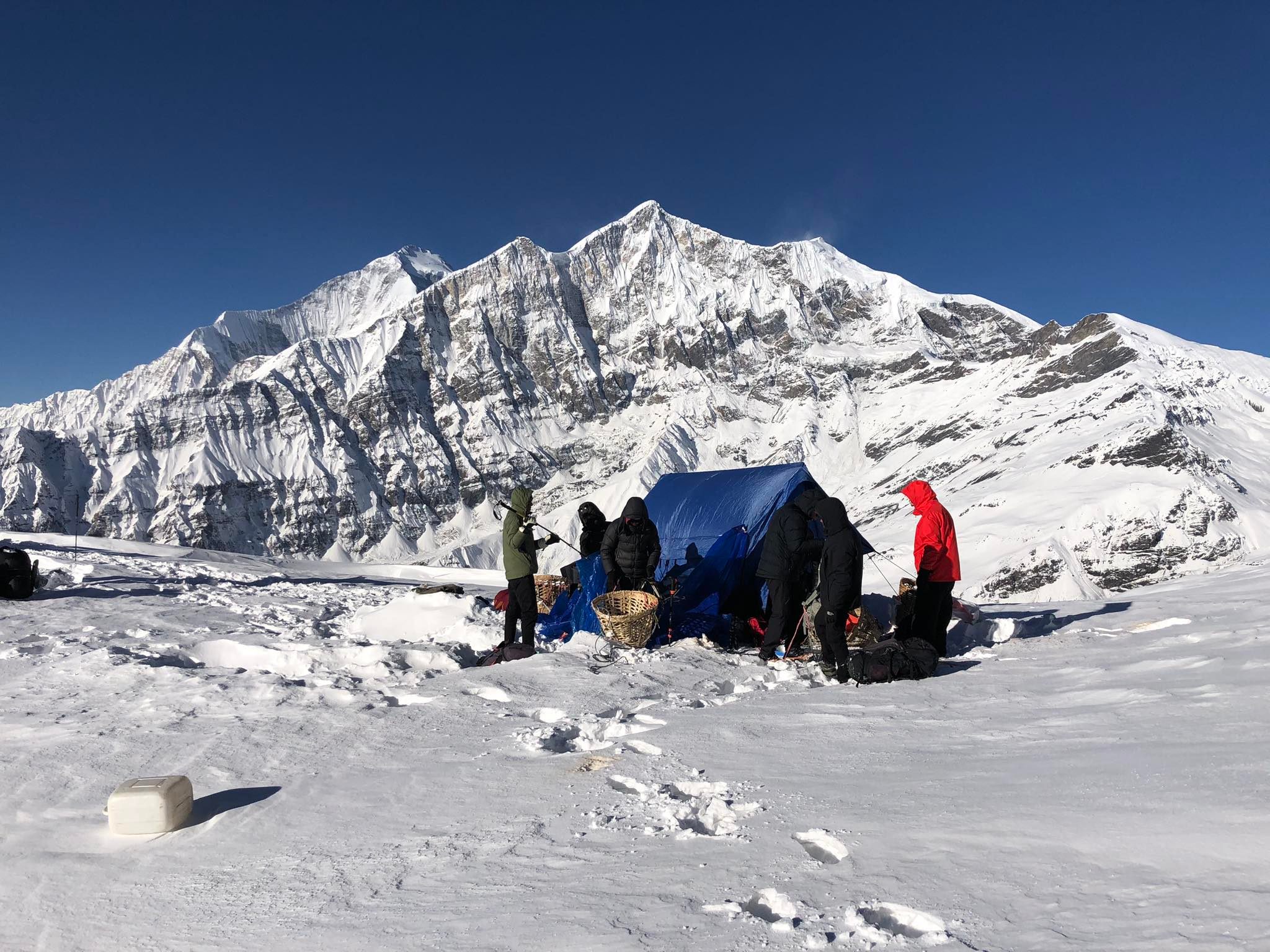
Mount Dhaulagiri, soaring at 8,167 m, is the 7th highest peak in the world and a prominent landmark in western Nepal. Located in the Dhaulagiri Himal of Myagdi District, its name – meaning “White Mountain” in Sanskrit – perfectly captures its snow-clad grandeur.
First climbed in 1960 via the Northeast Ridge by a Swiss-Austrian team, Mt Dhaulagiri remains a highly challenging mountain that demands skill, preparation, and experience from mountaineers. Rising dramatically over 7,000 m above the Kali Gandaki Valley, the mountain offers stunning landscapes, steep ridges, and glaciers, making it one of the most thrilling Himalayan climbs.
Our Dhaulagiri Expedition provides complete support, including experienced Sherpa guides, Base Camp facilities, and high-altitude logistics, ensuring climbers have a structured, safe, and unforgettable journey toward the summit.
For those who prefer trekking over technical climbing, the Dhaulagiri Base Camp Trek offers a spectacular introduction to this remote Himalayan region.
Location and Significance
- Myagdi District, Western Nepal
- 7th highest mountain in the world, 5th in Nepal
- Name origin: “Dhavala” = White, “Giri” = Mountain
First Ascent and History
- First climbed in 1960 via Northeast Ridge (Swiss-Austrian team)
- Historical surveys and aerial reconnaissance
Dhaulagiri Expedition Facts: Elevation, Duration, and Group Size
Key Trip Facts and Height of Mt Dhaulagiri
| Fact | Detail |
|---|---|
| Grade | Mountaineering |
| Elevation | 8,167 m (26,795 ft) |
| Location | Dhaulagiri Himal, Nepal |
| Coordinates | 27°53′0″ N 87°05′00″ E |
| First Ascent | Swiss-Austrian team, May 13, 1960 |
| Season | Late Spring and Autumn |
| Duration | 47 days |
| Group Size | 2–15 climbers per group |
Why Choose the Dhaulagiri Expedition for Mountaineering?
Expedition Highlights
- Northeast Ridge summit route
- Remote Himalayan landscapes and glaciers
- Technical climbing on snow, ice, and rock
Expert Support and Safety
- Experienced Sherpa guides
- High-altitude logistics
- Medical and emergency services
Base Camp Services and High Camp Support for Dhaulagiri Climbing
Accommodation and Meals
- Expedition-quality tents, dining and kitchen facilities
- Three freshly prepared meals per day, 24/7 hot & cold drinks
High Camp Setup
- Camps I (5,900 m), II (6,400 m), III (7,400 m)
- Food, fuel, oxygen, fixed ropes, communications
Communication & Safety
- Satellite phone and solar panels
- Gamow bag and first aid kits
Approach to Dhaulagiri Base Camp – Trekking and Logistics
Spring Route
- Pokhara → Beni → Myagdi Khola Valley → Darbang → Bagar → Italy Base Camp → Dhaulagiri Base Camp
Autumn Route
- Pokhara → Beni → Kali Gandaki Valley → Tatopani → Ghasa → Marpha → Yak Kharka → Base Camp
Climbing Routes and High Camps on Mt Dhaulagiri
Advance Base Camp (ABC)
- Altitude 5,300 m, gear storage only
Camp I
- 5,900 m, East Col; avalanche & crevasse risks
Camp II
- 6,400 m, technical climbing required
Camp III
- 7,400 m, West Ridge; most challenging section
Summit Push
- Direct from Camp III; optional bivouac at 7,900 m
Day-to-Day Dhaulagiri Expedition Itinerary
Spring Season
- Days 1–3: Kathmandu arrival, permits, preparation
- Days 4–6: Drive to Pokhara → Marpha, trekking and acclimatization
- Days 7–8: Trek to Yak Kharka → Hidden Valley → Base Camp
- Days 9–39: Climbing and summit attempt
- Days 40–45: Return via Jomsom → flight to Pokhara → drive to Kathmandu
- Days 46–47: Debrief, leisure, farewell dinner, departure
Autumn Season
- Similar route via Darbang → Dharapani → Muri → Bagar → Doban → Sallaghari → Italy Base Camp → Base Camp
Mt Dhaulagiri Climbing Cost
Spring Season Expedition Cost (March–May 2025)
- Full Board Service: Roughly USD 60,000 – 70,000 per climber
- Base Camp Service Only: Roughly USD 35,000 – 45,000 per climber
Autumn Season Expedition Cost (September–November 2025)
- Full Board Service: Roughly USD 65,000 – 75,000 per climber
- Base Camp Service Only: Roughly USD 38,000 – 48,000 per climber
Exact cost depends on the number of climbers, custom services, and logistics. Please contact us directly at sales@nepalhiking.com for a personalized quotation.
Frequently Asked Questions (FAQs) About Dhaulagiri Climbing
Who can join the Dhaulagiri Expedition?
This expedition is for experienced mountaineers with prior high-altitude climbing experience. Technical ice, snow, and rock skills are required.
What is the best season to climb Dhaulagiri?
Late spring (March–May) and autumn (September–November) are the safest and most favorable climbing seasons.
How long is the Dhaulagiri expedition?
The full expedition typically lasts 47 days, including trekking, acclimatization, climbing, and return.
What is included in the Base Camp service?
Base Camp service includes tents, meals, communication, first aid, solar power, and support from climbing Sherpas.
Is oxygen provided during the climb?
Yes, oxygen cylinders, masks, and regulators are provided for climbers and Sherpa guides at high camps.
How many Sherpas are assigned to each climber?
Typically, a 1:1 Sherpa ratio is provided for summit support. Additional Sherpas assist in setting up ropes and high camps.
What are the risks involved?
Dhaulagiri is technically challenging. Risks include avalanches, crevasses, altitude sickness, strong winds, and extreme cold. Proper training and fitness are essential.
How do I get to the Base Camp?
Treks to the Base Camp start from Pokhara via Beni and Myagdi Khola Valley (Spring) or via Kali Gandaki Valley (Autumn). Trek duration is about 4 days.
Are there alternative routes for descent?
Yes, climbers usually return via Hidden Valley → Yak Kharka → Jomsom, followed by a flight to Pokhara or driving.
Book Your Dhaulagiri Expedition – Climb Mt Dhaulagiri Safely
- Contact NepalHiking.com for a fully guided, safe, and unforgettable climbing expedition!